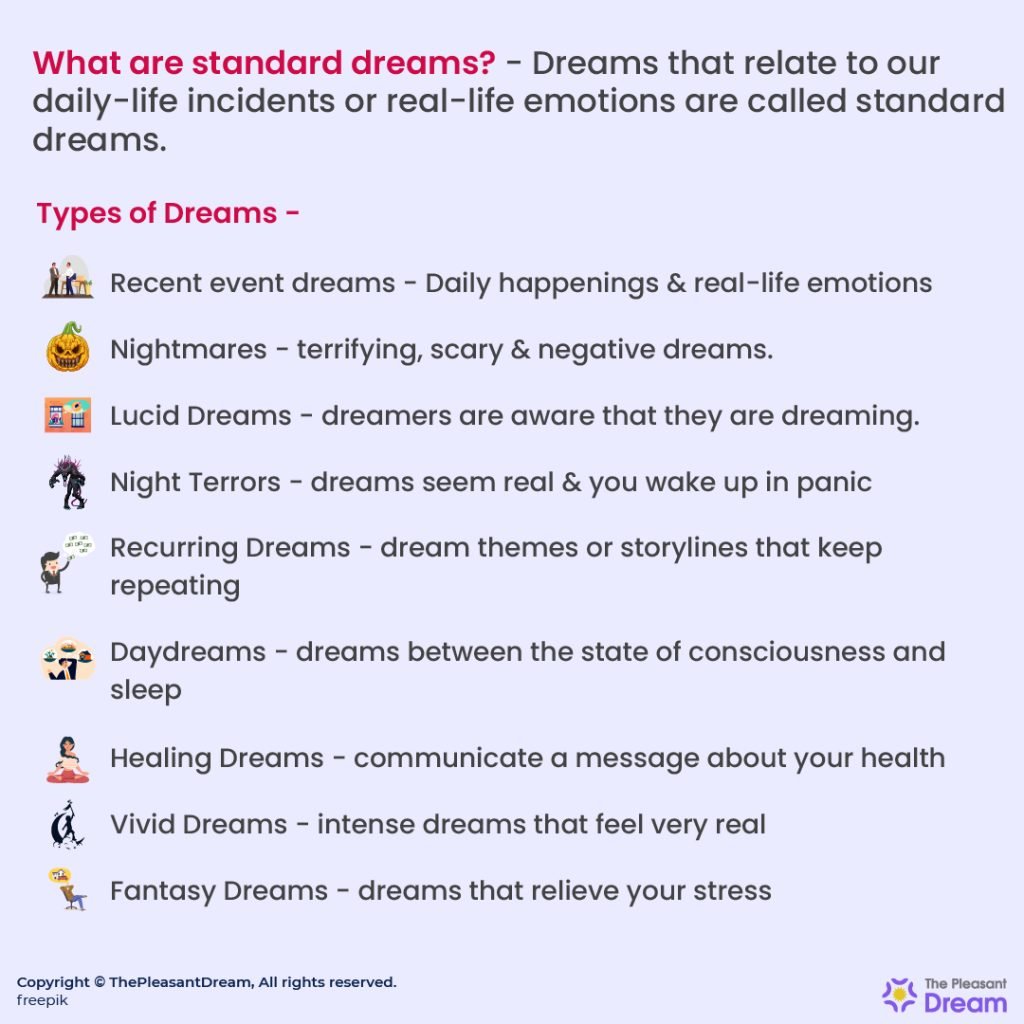
For the bigger picture and full context, make sure you read our main guide on Different Types Of Dreams And Their Meanings Explained.
markdown
Ever wake up feeling like you've lived an entire movie, only to realize it was all a dream? Understanding the different kinds of dreams and their meanings can unlock hidden insights into your subconscious, impacting everything from your daily anxieties to your deepest desires.
At a glance:
- Discover the most common types of dreams and what they often symbolize.
- Learn how to identify recurring dream themes and address their root causes.
- Get practical tips to improve your dream recall and potentially influence your dream content.
- Understand when dream content warrants seeking professional guidance.
- Explore techniques for interpreting your dreams beyond surface-level symbolism.
Decoding Your Subconscious: A Guide to Dream Types
Dreams aren't just random firing of neurons during sleep. They offer a window into your inner world. But with so many potential variations, how do you start to decipher them? Let’s break down some common categories and what they might signify. You can Explore the meaning of dreams in more detail and gain a broader perspective on their significance.
Lucid Dreams: Taking Control of Your Dream World
Imagine knowing you're dreaming and being able to fly, explore fantastical landscapes, or even confront your fears head-on. That's the power of lucid dreaming. Approximately 55% of people have experienced this phenomenon at least once.
- Benefits: Overcoming phobias, boosting creativity, enhancing problem-solving skills, and promoting personal growth.
- How to achieve lucidity: Reality testing during the day (e.g., frequently asking yourself "Am I dreaming?" and checking your environment) and using the Mnemonic Induction of Lucid Dreams (MILD) technique, which involves repeating a phrase like "Next time I'm dreaming, I will remember I'm dreaming" before falling asleep.
Recurring Dreams: Unraveling Unresolved Issues
These are the dreams that haunt you again and again, often with similar themes or scenarios. They're your subconscious's way of saying, "Hey, we need to deal with this!"
- Common themes: Being chased, unprepared for an exam, teeth falling out.
- Meaning: Usually point to unresolved conflicts, unmet needs, or persistent anxieties in your waking life. For example, recurring dreams about being unprepared for an exam might suggest performance anxiety or a fear of failure.
- Action: Identify the core emotion or situation in the dream and consider how it relates to your current life. Journaling can be extremely helpful in uncovering these connections.
Nightmares and Night Terrors: Differentiating Fear in the Dark
Nightmares and night terrors both involve fear, but they're distinctly different experiences.
- Nightmares: Vivid, disturbing dreams that cause fear, anxiety, or distress, leading to awakening. They're often triggered by stress, trauma, or certain medications. Between 50-85% of individuals with PTSD experience nightmares.
- Night Terrors: Sudden arousals from deep, non-REM sleep characterized by screaming, flailing, and intense fear, often with no memory of the event upon waking. These are more common in children.
- Action: For nightmares, consider stress management techniques, therapy (especially trauma-focused therapy), and addressing any underlying medical conditions. For night terrors, create a safe sleep environment and consult with a pediatrician or sleep specialist.
Prophetic Dreams (Precognitive Dreams): Glimpses into the Future?
These dreams seem to predict future events. While explanations range from coincidence to subconscious processing of subtle cues to spiritual beliefs, their impact can be profound.
- Example: Dreaming about a specific event that later comes true.
- Interpretation: Approach these dreams with caution. It's crucial to distinguish between coincidence and genuine premonition. Consider whether the dream provided specific, verifiable details or was more general and open to interpretation.
False Awakening Dreams: The Dream Within a Dream
Ever dream you woke up, got ready for the day, only to really wake up later? That's a false awakening.
- Meaning: These dreams are often linked to stress or anxiety about the day ahead. You might be feeling overwhelmed by your responsibilities and the dream reflects your subconscious desire to escape them.
- Action: Practice relaxation techniques before bed, such as meditation or deep breathing exercises, to reduce anxiety and improve sleep quality.
Daydreams: Escaping Reality and Boosting Creativity
While not technically "night" dreams, daydreams are a form of waking fantasy that can significantly impact your mental well-being. Up to half of our waking thoughts might be daydreams.
- Benefits: Boosting creativity, problem-solving, mental escape, and emotional regulation.
- Caution: Excessive daydreaming can lead to procrastination and disengagement from reality.
- Action: Embrace daydreams as a tool for creativity and relaxation, but set boundaries to ensure they don't interfere with your daily responsibilities.
Common Dream Themes and Their Meanings
Beyond specific types of dreams, certain themes recur across individuals and cultures. Here's a brief overview:
| Dream Theme | Possible Meaning |
|---|---|
| Teeth Falling Out | Feelings of powerlessness, anxiety about appearance or communication. |
| Being Chased | Avoiding a problem, person, or emotion in waking life. |
| Flying | Freedom, liberation, a desire to escape limitations. |
| Falling | Insecurity, instability, lack of control in a situation. |
| Naked in Public | Vulnerability, feeling exposed or judged. |
| Unable to Find a Toilet | Difficulty meeting basic needs or expressing oneself. |
Practical Playbook: Mastering Your Dream Landscape
Ready to take a more active role in understanding and potentially influencing your dreams? Here's a step-by-step guide:
- Start a Dream Journal: Keep a notebook and pen (or a voice recorder) by your bed. Record your dreams immediately upon waking, while the details are still fresh.
- Tip: Even fragments of dreams are valuable. Note down any emotions, images, or sensations you recall.
- Identify Recurring Themes & Emotions: After a few weeks, review your journal for recurring themes, symbols, and emotions.
- Example: Do you frequently dream about being lost? This might reflect a feeling of being directionless in your career or personal life.
- Reflect on Your Waking Life: How do the dream themes relate to your current experiences, challenges, and relationships?
- Ask yourself: What unresolved issues might be surfacing in my dreams? What anxieties or fears am I avoiding?
- Practice Reality Testing: Throughout the day, consciously question whether you're awake. Check your surroundings, look at a clock twice to see if the time changes, or try to push your finger through your palm. This increases your awareness and can help you recognize when you're dreaming.
- Explore Lucid Dreaming Techniques: If you're interested in controlling your dreams, research and practice techniques like MILD (Mnemonic Induction of Lucid Dreams) or WILD (Wake Initiated Lucid Dreaming).
- Experiment with Dream Incubation: Before falling asleep, focus on a specific question or problem you want to address in your dream. Visualize the scenario and repeat the question to yourself. This can encourage your subconscious to work on the issue while you sleep.
Quick Answers: Common Dream Questions
- Q: Are all dreams symbolic?
- A: While many dreams contain symbolic elements, some may simply reflect recent events or thoughts. Consider the context and your own personal associations.
- Q: Does everyone dream in color?
- A: Most people dream in color, but some report dreaming in black and white. This may be related to media consumption habits or individual differences in visual processing.
- Q: Can dreams predict the future?
- A: While anecdotal evidence suggests that some dreams may be precognitive, there's no scientific proof of this phenomenon. Coincidence and subconscious processing of information are more likely explanations.
- Q: What if I don't remember my dreams?
- A: Most people forget their dreams shortly after waking. Improve your dream recall by keeping a dream journal, practicing relaxation techniques, and avoiding alcohol or caffeine before bed.
- Q: Are there definitive "dream dictionaries" that offer universal interpretations?
- A: While dream dictionaries can provide a starting point, remember that dream interpretation is highly personal. Your own associations and experiences are crucial to understanding the meaning of your dreams.
When to Seek Professional Help for Dream Concerns
While dream interpretation can be a fascinating and insightful process, sometimes the content of your dreams may indicate a need for professional help.
- Nightmares that significantly disrupt sleep or cause daytime anxiety: If nightmares are frequent, intense, or interfering with your ability to function, seek guidance from a therapist or sleep specialist.
- Dreams triggered by a traumatic event: Trauma-related nightmares can be a symptom of PTSD. Therapy, particularly trauma-focused therapy, can help you process the experience and reduce the frequency and intensity of nightmares.
- Persistent or disturbing dream themes that you can't resolve on your own: If you're struggling to understand the meaning of your dreams or if they're causing you significant distress, a therapist can provide support and guidance.
Dreams offer a rich tapestry of personal insights. By understanding the different kinds of dreams and their meanings, you can unlock a deeper understanding of yourself and your inner world.